


UK borrowing costs hit 19-year high as global bond rout intensifies
UK borrowing costs hit 19-year high as global bond rout intensifies

Chris PriceTue, September 15, 2026 at 5:07 PM UTC
0
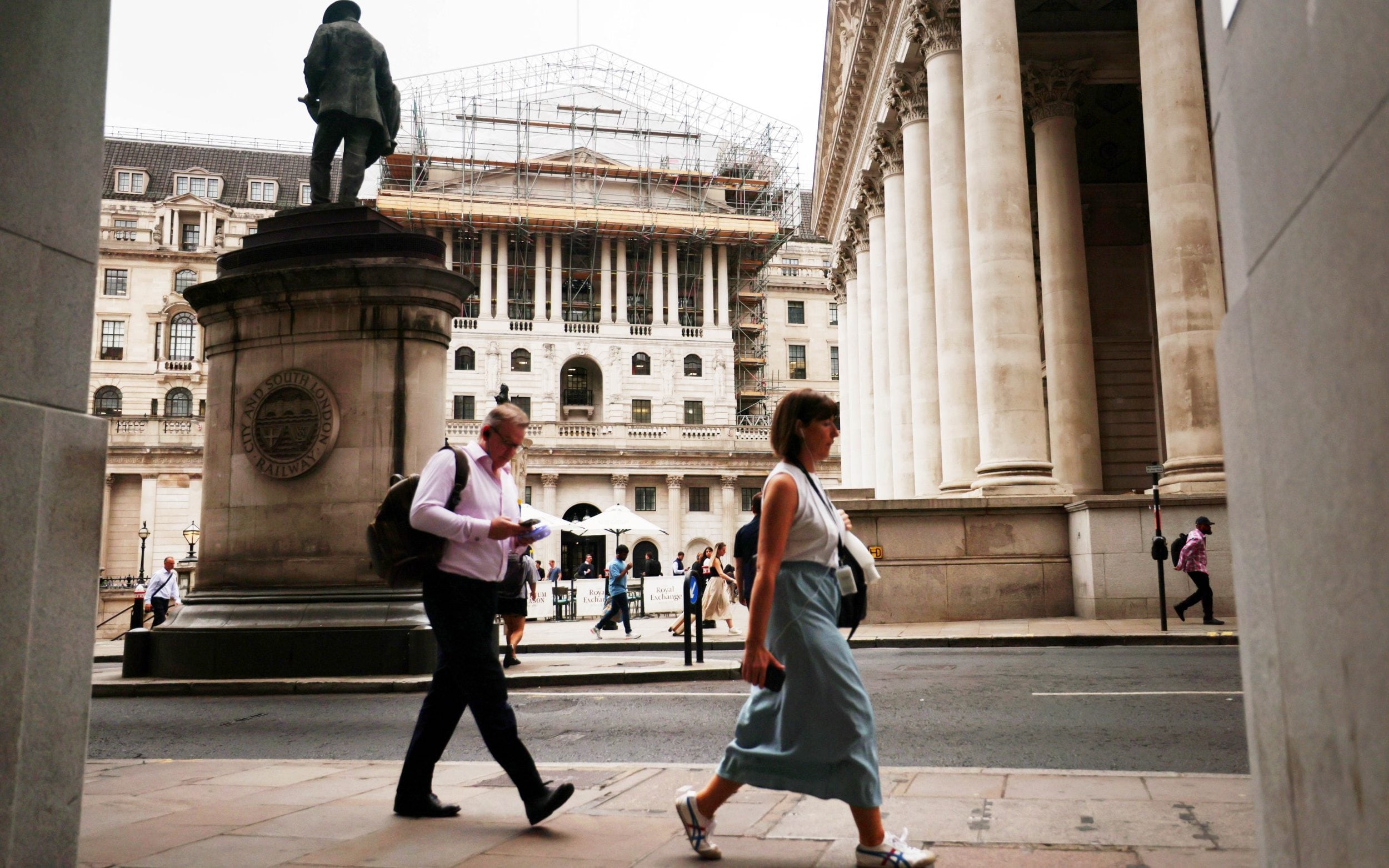
The Bank of England is expected to raise interest rates before the end of the year - ANDY RAIN/EPA/Shutterstock
The cost of UK government borrowing hit its highest level since 2007 in a fresh global debt sell-off.
The yield on 10-year gilts, a benchmark for what the Treasury pays to borrow money, rose from 5.37pc to 5.43pc on Tuesday – a 19-year high.
Short-term debt costs have also jumped, with the yield on two-year UK bonds surpassing 4.9pc for the first time in three years.
Rising oil prices are to blame, with fears a spike in energy costs will reignite inflation.
It comes as the US Federal Reserve and the Bank of England face pressure to raise interest rates this week to combat rising prices.
Anthony Brinkman, a portfolio manager at Principal Asset Management, said: “The recent gilt market movements seem to be intent on showing central banks they are out of time – the market is expecting action.”
Borrowing costs around the world are rising after a 20pc surge in oil prices so far this month.
Brent crude tipped above $109 a barrel this week after Houthi rebels in Yemen seized control of a key port in the Red Sea, threatening shipping.
The US Federal Reserve is expected to raise interest rates on Wednesday in the face of the inflation threat.
As a result, the yield on 10-year US Treasury bonds has surged above 5pc for the first time since 2007.
The Bank of England is forecast to keep rates on hold at its next meeting on Thursday but traders are betting rates will rise from 3.75pc to 4pc in November, days after Chancellor John Healey’s first Budget.
Read the latest updates below.
06:04pm
Signing off...
Thanks for following our coverage of rising borrowing costs as the sell-off in global bond markets continues.
Glancing at the markets, the UK’s benchmark 10-year gilt yield is sat at 5.317pc.
The 20-year and 30-year yields are hovering around the 5.9pc mark.
We will see you tomorrow morning for the latest inflation figures.
05:55pm
UK mortgage rates climb towards 5pc
Climbing UK borrowing costs are seeing major lenders reprice residential and buy-to-let mortgages, according to experts.
This pressure stems from a sharp selloff in government bonds, which pushed 10-year gilt yields to a 19-year high near 5.40pc.
Rohit Kohli, Director at The Mortgage Stop, noted that “this is being driven by the bond markets” and warned that “gilts and swaps aren’t kind to borrowers” ahead of the Bank of England’s upcoming meeting.
With sub-4pc fixed-rate deals gone, brokers expect rates to test the 5pc threshold next.
Craig Fish, Director at Lodestone Mortgages, said while borrowers with large deposits can still find rates around 4.5pc to 4.6pc, “that window is narrowing by the week,” adding that “until swap rates settle, expect rates to keep drifting up, not down.”
05:15pm
Treasury’s recent buybacks were a success, says Bessent
Scott Bessent has said his recent buybacks of longer-dated US debt were a success, arguing that the demand for government bonds in the two auctions that followed demonstrate that.
This is despite the yield on the benchmark 10-year Treasuries rising to 4.85pc, its highest level since late 2023, soon after the move.
The cost to borrow over 20 and 30 years also rose sharply.
The US Treasury Secretary had described the buybacks as a way to suppress rising bond yields, which increase the cost of government borrowing.
He said: “There is a counterfactual of what it would have done, and we then proceeded to have the two most successful Treasury auctions that we’ve had in 20 years.”
“Since President Trump has come in, it has been the best-performing bond market in the developed world.”
04:36pm
Bessent praises ‘trade certainty’ and ‘strong dollar’ ahead of meeting with China
Scott Bessent has said that the US dollar continues to thrive as a global reserve currency, during an address on Tuesday.
He said that rising transaction volumes globally reflect the “credibility of our system and what this administration is doing.”
He argued that the Trump administration’s policies are providing “regulatory certainty, tax certainty, trade certainty and energy certainty”, and are drawing “trillions of dollars” into the US.
Mr Bessent announced plans to meet Chinese Vice Premier He Lifeng this weekend prior to a broader summit between President Donald Trump and Chinese President Xi Jinping.
That meeting will focus heavily on curbing China’s financial ties to Tehran, as Washington works to cut off Iran’s access to the Western financial system.
03:37pm
Central banks face a ‘self-reinforcing’ cycle of interest rate rises
Central banks are at risk of a “self-reinforcing” cycle of rate rises and higher bond yields as oil prices remain elevated, economists have warned.
Neil Shearing, Chief Economist at Capital Economics, said: “Higher interest rates then feed through into higher government bond yields which in turn raises concerns about fiscal sustainability, particularly in economies where debt levels and fiscal deficits are already high.”
“Those concerns can push bond yields higher still, creating a self-reinforcing cycle in which rising yields feed fiscal worries, which in turn drive yields higher.”
Mr Shearing adds that in the US, aggressive spending proposals and dismissive policymakers are failing to calm investor anxiety over fiscal sustainability.
A sharp rise in oil prices above $100 is driving up global headline inflation and putting pressure on central banks to raise interest rates.
The benchmark Brent crude was sat at $107 per barrel on Tuesday afternoon as attacks on critical energy infrastructure in the Middle East and disruption in the Strait of Hormuz persist.
02:56pm
The Bank of England must resist pressure to raise interest rates

The mistake-prone European Central Bank (ECB) has raised its deposit rate for the second time this year, to 2.5pc.
While inflation in the eurozone has ticked up to 3.3pc on renewed energy market disruptions, the ECB’s response risks stalling anaemic growth momentum, which by itself would bring inflation back down once the price shock passes.
Across the Atlantic, the American economy continues to power on, as consumers and businesses ride high on the back of a stock market boom and fiscal largesse. US inflation, at 3.4pc, is barely higher than the eurozone’s, but the Federal Reserveshould tighten.
However, UK inflation is being fuelled by the Iran war, not the economy overheating.
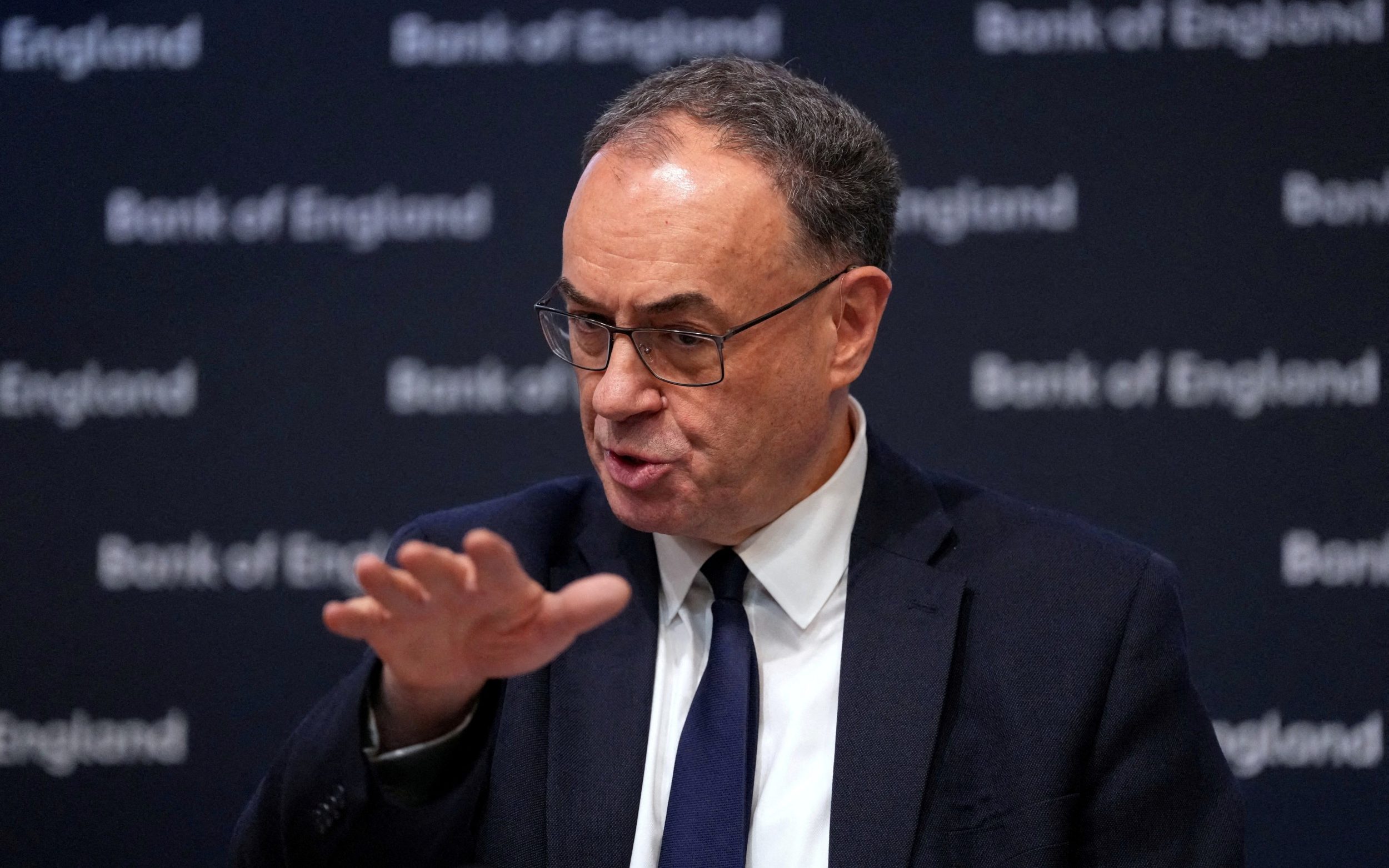
Governor Andrew Bailey and his fellow Bank of England rate-setters should tolerate a temporary inflation overshoot - Kirsty Wigglesworth/Pool via REUTERS
02:38pm
Bank of England ‘risks losing credibility’ unless it raises rates
The Bank of England would be making a mistake if it does not suggest it will raise interest rates at its next meeting on Thursday, economists said.
So far this year, policymakers have resisted the urge to raise rates despite inflationary pressure from rising energy prices due to the Iran war.
Advertisement
However, economists said the bank would risk “losing credibility” if it does not suggest this week that rates will rise soon.
Money markets expect the Bank to raise rates four times by June next year.
Andrew Wishart, senior UK economist at Berenberg, said: “We agree with the Bank of England that the latest spike in energy prices is unlikely to trigger a new price-wage spiral, but it would probably be a mistake for the central bank to argue that it does not need to hike.
“The tightening in financial conditions that the Bank of England says will help prevent persistent inflation is predicated on the central bank raising the policy rate.
“To keep this ‘insurance policy’ in place, the Bank must deliver at least some of the tightening priced in. Otherwise, it will fall behind other central banks and risk losing credibility.
“This would invite downward pressure on the pound that raises import prices and adds to inflation.”
02:33pm
Wall Street pressured by rising borrowing costs
US stocks fell at the open as the cost of government borrowing hit its highest level since 2007.
The Dow Jones Industrial Average declined 0.4pc to 52,209.02 while the benchmark S&P 500 dropped by 0.2pc.
The tech heavy Nasdaq Composite sank by 0.3pc to 26,113.11.
02:25pm
Wall Street giant forecasts two US rate rises
The Federal Reserve will raise interest rates twice this year in the face of surging inflation, according to Morgan Stanley.
The Wall Street bank said it expects the Fed to raise interest rates by a quarter of a percentage point on Wednesday to a new range of 3.75pc to 4pc, with a second quarter point rise following in December.
Michael Tapin, its chief US economist, said: “Signs of second-round effects from energy prices, strong demand tied to AI-related investment, a neutral rate that is possibly temporarily higher, and concerns about credibility mean the balance of risks now argues for a somewhat more restrictive policy.”
The expectations for higher rates put further pressure on government borrowing costs, which have already reached levels last seen in the lead up to the global financial crisis.
But analysts fear borrowing costs costs could rise even more sharply if the investors fear that the Fed is not getting control of inflation.
02:15pm
As the era of free money ends, Britain braces for a £100bn hangover
Britain’s money-printing experiment is about to become more expensive.
What began as a way to rescue the economy has quickly become a headache for both the Government and the Bank of England.
When interest rates were low in 2009 but the economy was crying out for help, banks began their campaign of “quantitative easing”.
The goal was to drive down the cost of borrowing, encouraging people and businesses to spend more to stimulate the economy.
The experiment largely worked during the financial crisis but economists believe the Bank of England’s emergency scheme is poised to drain public finances.
01:56pm
Wall Street poised to fall
US stock markets were set to open lower under pressure from higher oil prices and elevated borrowing costs.
Monday’s weak performance is expected to continue after tech bosses called for a slowdown in the development of AI.
Several tech stocks sank in premarket trading, with Alphabet and Microsoft down around 1pc each.
While there is little clarity so far on how such a slowdown would work, the declines have added to the gloom in markets.
Stocks were already being hit by high levels of inflation and fears of higher borrowing costs.
The US Federal Reserve is expected to raise interest rates on Wednesday as US diesel prices hit record highs.
Anthony Saglimbene, an analyst at Ameriprise Financial, said: “Energy is doing most of the damage on the inflationary front at present.”
Ahead of the opening bell, the Dow Jones Industrial Average was down 0.2pc and the S&P 500 and Nasdaq 100 declined 0.1pc.
01:35pm
Inflation risks pushing up borrowing costs
Government borrowing costs are rising as there is “no sign of improvement” to the war in the Middle East, economists said.
John Canavan, an analyst at Oxford Economics, said bond yields risk rising further in the near term, with higher oil prices ramping up pressure on central banks around the world.
The US Federal Reserve is under pressure to raise interest rates on Wednesday after US inflation remained at 3.4pc in August, well above the central bank’s 2pc target.
He said: “Inflation concerns, Fed rate hike risks, and enormous sovereign and corporate supply have been pushing yields higher since the start of the US/Israel-Iran war, and the pace of the rise in yields accelerated this week as oil prices surged.
“Those key factors behind the rise in yields will remain with us over the near term, although we expect inflation to ease next year as oil prices eventually begin to decline and the impact from tariffs continues to roll off the year-over-year inflation reading.
“The latest CPI figures and the more than 55pc surge in oil prices since early July prior to today’s pull-back highlight ongoing inflation risks.”
01:27pm
Diesel hits four-year high
Diesel and petrol prices have hit their highest level in four years after the latest surge in oil prices.
Petrol prices have risen above £1.70 for the first time since August 2022 while diesel has risen to 192.86p, according to RAC, as Brent crude remains above $106 a barrel.
Simon Williams, head of policy at the motoring group, said: “Since the start of this month, the cost of filling a family car has already risen by almost £5, to £94 for petrol and £106 for diesel.
“So the pressure on the Chancellor to act to support households, so many of whom are dependent on the car, is building.
“Fuel duty is set to start rising from January but as we’ve said previously, there is a strong argument for leaving it at its current level, at least until the end of the Parliament.”
12:51pm
Good afternoon
Thanks for joining me. The cost of UK borrowing has hit a fresh 19-year high ahead of the Bank of England’s next interest rate decision this week.
Global stocks have fallen and US Treasury yields have hit their highest level since 2007 amid concerns about a deepening energy shock to the world economy.
Borrowing costs around the world have climbed as investors grapple with rising rate expectations, heavy debt issuance, solid economic growth and worries about the country’s long-term fiscal outlook.
It is adding pressure on the Bank of England and Federal Reserve to raise interest rates this week – and has sent stock markets lower.
MSCI’s main world stocks index fell 0.2pc on Tuesday, after dropping 0.7pc the day before.
The FTSE 100 was down 0.2pc while Europe’s Stoxx 600 was down 0.1pc. Both fell as much as 1pc earlier in the day.
Source: “AOL Money”
